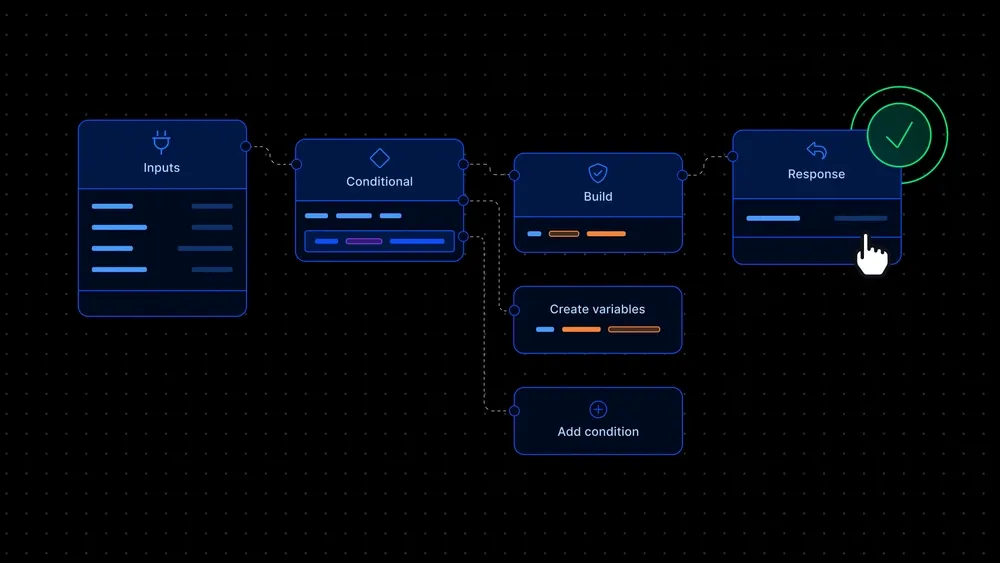
Last week I spent three days at Gartner's Application Innovation & Business Solutions Summit in Las Vegas, and by the end I could have drawn the most important slide of the conference from memory—because nearly every speaker drew a version of it.
It wasn't a slide about models. It was a slide about architecture. Specifically, about a middle layer: the place between the applications people touch and the systems that hold the data, where a business's actual rules and logic live. Session after session, analysts and vendors kept sketching that same middle tier and then arguing, in their own vocabularies, that it is the part of the stack that matters most in an AI-first world—and the part most enterprises haven't figured out how to own.
I went in expecting the usual AI-conference themes: bigger models, faster generation, more autonomy. What I found instead was that the center of the conversation is changing, away from the model and away from generation, and toward the layer where logic gets defined, exposed, and run.
The contested middle tier
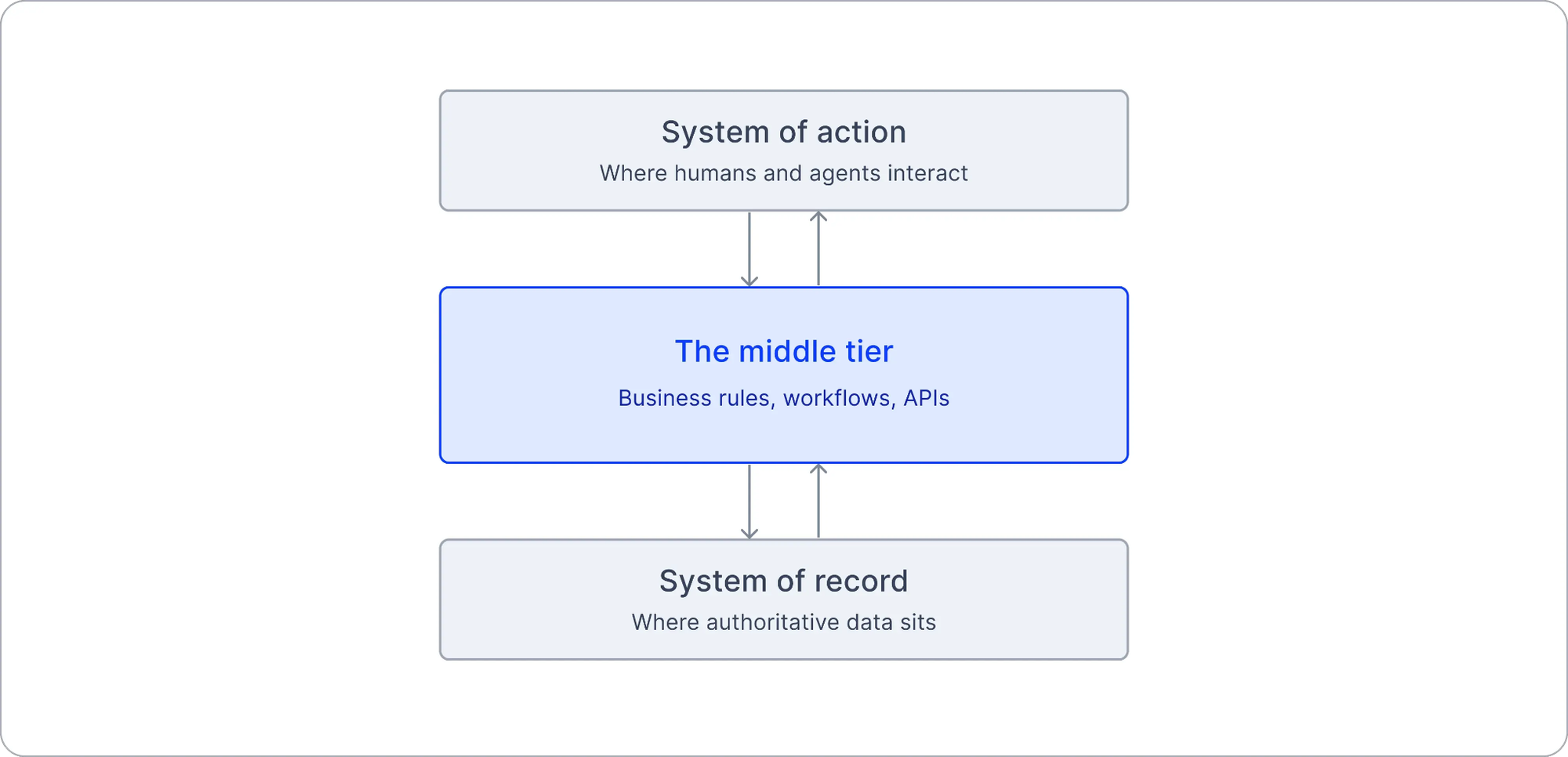
The clearest articulation came from the architecture and API sessions, which kept independently converging on the same three-layer picture.
The opening keynote's reference architecture decoupled applications into three tiers: a System of Action where humans and agents interact, a System of Intelligence where models and evaluation gates live, and a System of Record where authoritative data sits. A separate session on the state of APIs drew its own three-layer version, called the middle one "the context layer"—where business rules, workflows, and processes live—and named it the strategic battleground of the next few years. The whole "will agents replace SaaS" anxiety, that session argued, is really a fight over who owns that middle layer and how agents reach it.
I've written before about why core logic should be stable and legible while the edges stay flexible—guardrails for the core, freedom for the edge. Sitting in those sessions, I had the experience of hearing the industry name an architecture many of us have been feeling our way toward in practice.
The API layer is becoming the control point
What sharpened this for me was how often the conversation landed specifically on the API layer as the place where that middle tier is won or lost.
Gary Olliffe of Gartner, in a session on agentic architecture, put it about as cleanly as it can be put: if AI prompted data governance, then AI agents now prompt API governance. His advice was to keep your solid REST and GraphQL foundations and treat this moment the way the industry once treated the arrival of data governance—because the protocols themselves are still churning (he suggested some of today's hyped agent standards may not survive twelve months). The durable bet isn't a protocol. It's owning the stable, governed layer underneath the protocol noise.
Postman's field CTO made the demand-side version of the same case: agent readiness is API readiness. They'd run hard numbers on what happens when an agent has to figure a system out on its own versus being handed a clean, prepared spec—letting an agent search the web for context was dramatically less accurate and, in their testing, up to 1,280 times more expensive. The takeaway that's becoming consensus: fix your APIs and logic for your humans first, and the agents follow. Scattered, undocumented logic isn't a tidiness problem anymore. It's a measurable cost.
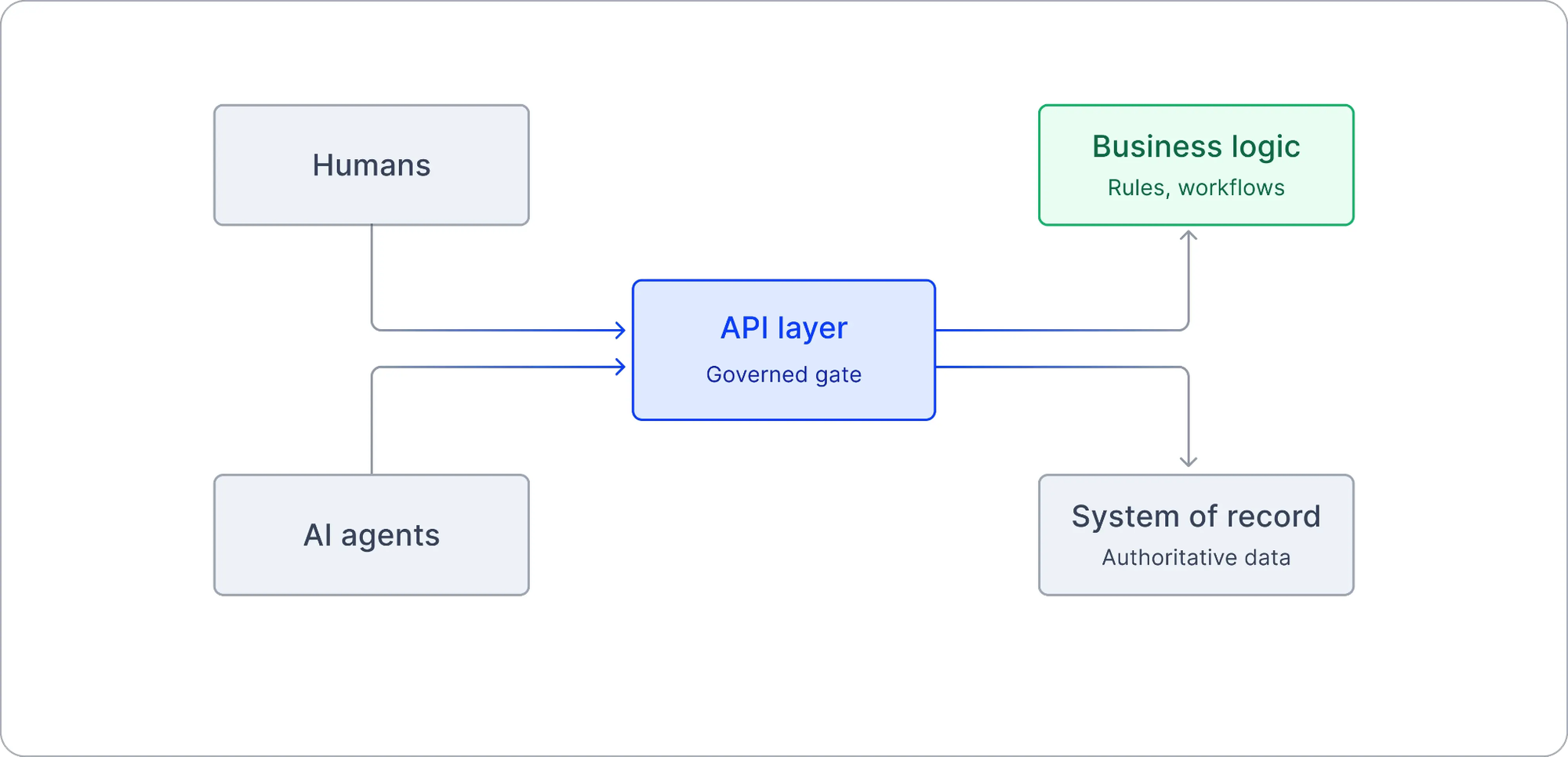
Put those together and the API layer stops being plumbing. It becomes the thing that determines whether AI works at all—the entry point to the contested middle, and the place where control has to be exercised.
From the stage to the floor
I heard all this on the stage, but what convinced me it was real was hearing it echoed by the people walking the floor.
By the second day, buyers had picked up the analysts' language and were using it to describe their own situations. Multiple conversations we had at the Xano booth included phrasing like "transparency in the execution layer"—not a phrase anyone uses casually. After one of our booth demos, an engineering leader looked at what we'd shown him, nodded, and said "headless." That was exactly the word an analyst had used onstage that morning to describe where APIs are heading.

That was the moment it clicked for me. A problem feels real, and not like something an analyst invented, when the buyer reaches for the same language to name a pressure they already felt. That's what was happening at this event. The architecture wasn't just on the slides; it was the way practitioners had started describing their own stacks.
Why governance is the destination, not the opening line
AI governance matters, and it’s the end goal we’re all trying to get to. But the ability to govern requires having a proper architecture in the first place. You can’t govern what you can’t see, and you can’t see logic that's scattered across codebases, stored procedures, and undocumented endpoints. Get the architecture right—logic centralized in a governed middle layer, exposed through clean APIs—and governance stops being a bureaucratic afterthought. It becomes something you can actually do.
The keynote made this explicit with its multiplier framing, where AI value behaves like multiplication rather than addition: push your model capability up, but let trust or governance drift to zero, and the whole product collapses to zero. The numbers from the floor said the same thing in a blunter way.
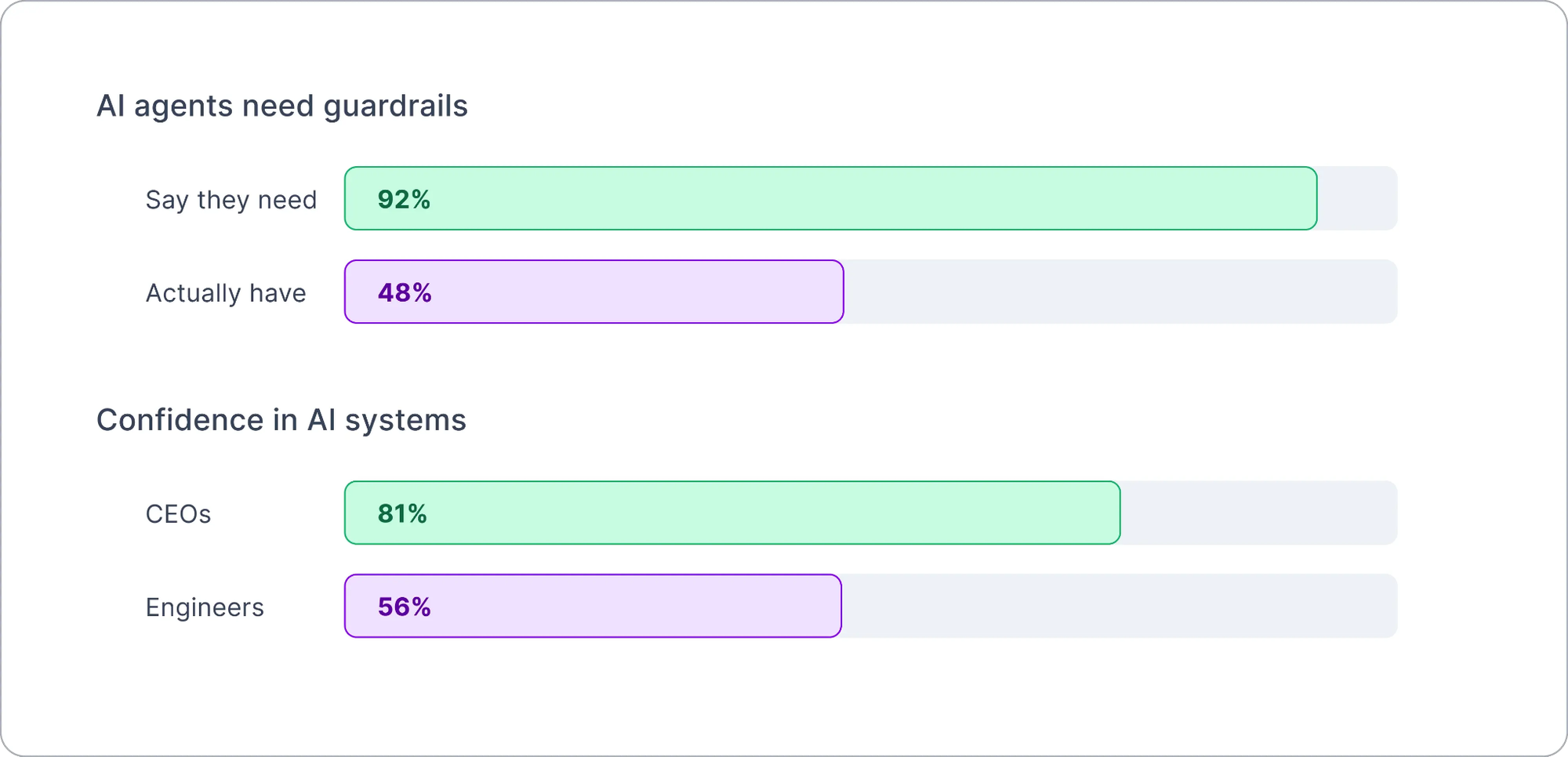
The most dangerous failure mode in that middle isn't runaway autonomy. It's humans approving systems they don't fully understand. And the only durable fix is structural: a place where business logic is centralized, exposed, and legible—so that when a human or an agent needs to govern it, there's something there to govern.
Like this take on the future of software development in the AI era? Get the latest posts straight in your inbox by subscribing to the Futureproof newsletter on LinkedIn.