AI is rewriting how software gets built. Code is increasingly generated from prompts, assembled by agents, and shipped faster than ever. GitHub reports that 46% of all code written by Copilot users is now AI-generated.
With that kind of speed, it's tempting to hand an AI agent a prompt and let it scaffold the whole thing—frontend, backend, data model, business logic—in one shot. But if you've tried building a real application this way, you've already discovered the problem: what comes out looks like it works, but it doesn't hold up. The business rules are fragile. The data model is an afterthought. The architecture is whatever the model hallucinated that day.
The issue isn't that AI is bad at building software. It's that AI is only as good as the foundation you give it. And that's why backend-first development—starting with your data model, APIs, and business logic before generating your frontend—isn't just a preference. In the AI era, it's the only approach that scales.
(Once you're ready, of course, it's time to think about the frontend! And for that we recommend this breakdown of the top frontend builders.)
Frontends are disposable, but backends have to be durable
This is the fundamental insight that backend-first development is built on. Frontends are increasingly generated, swapped, and rebuilt—by AI, by design tools, by changing requirements. A team might start with Lovable to validate an idea, move to a custom React frontend as they grow, and add a mobile app six months later. Each of those is a different frontend. None of them should require you to rebuild your backend.
Your backend is where the durable parts of your product live: your data model, your business rules, your permissions, your integrations, your financial logic, your audit trails. These are the things that define what your product actually does—not how it looks. When you build backend-first, you're investing in the layer that survives every frontend change, every redesign, and every pivot.
When you build frontend-first with AI, you're betting that the model made the right architectural decisions about your most critical logic. That's a bet most teams lose.
Why AI builds better on a solid backend
AI is remarkably good at generating frontends—scaffolding UIs, wiring up components, building flows. Where it struggles is defining the business rules, structuring data relationships, and making the architectural tradeoffs that determine whether your product holds up under real conditions. Those decisions require context that the model doesn't have: your compliance requirements, your customer contracts, your team's operational constraints.
Backend-first development solves this by giving AI the constraints and structure it needs to do its best work.
You define the logic. Your backend is where your product's core decisions live—who can access what, how prices are calculated, what triggers a notification, which workflows require approval. Start there, and you're setting the rules before AI takes the field.
AI generates faster and more accurately. Once your APIs and data model exist, AI tools can generate frontends with dramatically better results—because they're building against real endpoints with real schemas, not guessing at what the data should look like.
Your backend becomes the single source of truth. Frontend developers, AI agents, mobile apps, partner integrations—they all consume the same APIs. There's one place where the logic lives, and everyone builds on top of it.
You maintain control where it matters. Business logic, security rules, and data validation live server-side, governed and auditable. You're not relying on AI to "guess" what matters most—you've already defined it.
Backend-first and the stable core thesis
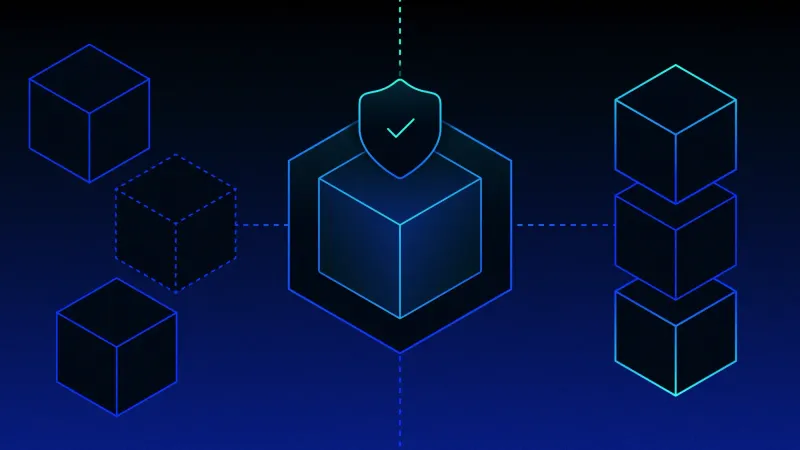
If you've been following how modern backend architecture is evolving, you'll recognize a deeper principle at work here. The best systems separate a stable core—the things that must always be true (ownership, permissions, financial rules, audit trails)—from dynamic edges, where team-specific workflows, experiments, and AI-generated logic live.
Backend-first development is this principle applied to how you build, not just how you architect. You start with the stable core: the data, the rules, the contracts. Then you let everything else—the frontend, the AI-generated flows, the partner integrations—compose on top of it. The core rarely changes. The edges change constantly. And the whole point is that changes at the edges never require changes to the foundation.
This is why backend-first is especially powerful in the AI era. AI agents are excellent at working at the edges—generating UIs, composing workflows, building integrations. But they need a stable foundation to build against. Without it, every AI-generated artifact is a standalone experiment. With it, every AI-generated artifact is a composable addition to a governed system.
The trust layer matters
There's one more dimension to this that's becoming critical as AI generates more of your codebase: governance.
When AI builds a frontend against a well-defined backend, you can validate the result. The API contracts are known. The data shapes are defined. The business rules are enforced server-side regardless of what the frontend does. If the AI generates a frontend that tries to skip a required approval step, the backend rejects it. If it mishandles permissions, the API enforces them anyway.
This is what it means to have a trust layer. Your backend isn't just where your logic runs—it's the system that ensures correctness even when the layers above it are generated, experimental, or imperfect. In a world where frontends are increasingly disposable and AI-generated, that trust layer is the only thing standing between your product and a production incident.
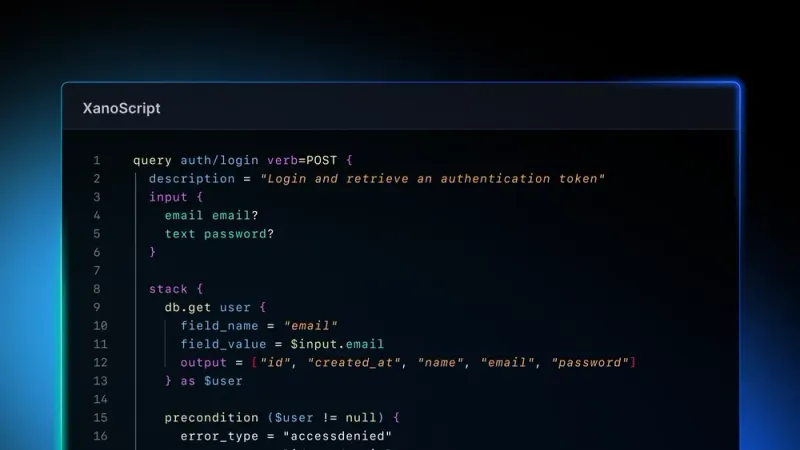
Platforms like Xano take this further by making everything that's built—whether by a developer or an AI agent—visible. Your team can see the logic, trace the execution paths, and verify correctness without reading every line of generated code. That's backend-first development combined with visual validation—and it's the foundation that makes AI-assisted development sustainable, not just fast.
What it looks like in practice
Let’s say you’re building a task management app. You could prompt an AI to create the whole thing—UI, backend, logic—but you’ll likely end up with spaghetti. Or worse: something that works, but can’t scale or evolve.
Instead, build your backend first:
- Define your data model (tasks, users, projects)
- Create your APIs (list tasks, create task, assign user)
- Add your business logic (permissions, notifications, due dates)
Now that your backend foundation is solid, the next step is choosing the right frontend builders. It can pull from your backend schema, auto-generate UI components, and even suggest flows—because it has something concrete to work from.
Check out this video to see just how quickly a frontend comes together once the backend is in place.
This is the real promise of AI-era development
The AI era isn't about removing developers from the process. It's about letting developers focus on the decisions that matter—the data model, the business rules, the architectural tradeoffs—and then letting AI handle the parts it's great at: generating interfaces, scaffolding components, composing flows.
Backend-first development is how you get there. Start with the piece that's durable, governed, and foundational. Then let everything else move as fast as it needs to.
If you're building real applications with AI—applications that need to scale, evolve, and earn the trust of your users and your team—build your backend first.
Of course, once you're ready for the frontend, there are lots of options to consider. Need help breaking them down from an expert who has tried them all? Here's a guide from NoCodeFinder on the top frontend builders.