When business rules live everywhere, what's your source of truth?
Your business rules are buried in code, duplicated across services, and invisible to anyone who doesn't know where to look—including AI agents. Xano is the visual BaaS platform that fixes that for you.

Extracted and governed
Business rules live behind versioned, governed APIs—independent of any framework, frontend, or codebase.

One layer for every system
Frontends, internal services, and third-party vendors all consume logic through a single governed backend.

Visible to your whole team
Engineers and non-technical stakeholders see, maintain, and audit the same logic in the same visual interface.
Every engineering organization accumulates business logic in the worst possible places. Pricing rules live in a controller. Eligibility checks are duplicated across three services. An approval workflow is hardcoded into a frontend that was supposed to be temporary. It works—until a rule change means you have to update it in four places and doing that means a two-week engineering investigation. This was already expensive, but AI is making it worse.
“While syntactically correct, AI output often lacks awareness of the broader system architecture and nuanced business rules, introducing subtle but severe flaws. This results in complex architectural and logical bugs that are more damaging and significantly harder to detect with traditional testing methods than common coding errors.”
Gartner, 2026 Predicts: AI Potential and Risks Emerge in Software Engineering Technologies

“When you have a 100 developers and hundreds of agents, consistency is everything. Xano enforces a service-oriented approach, which helps AI and developers with smaller context requirements for both. This enables agents and developers to build with AI speed with control and governance.”
Principal Software Engineer, Deriv
For most teams, business logic started simple: a few rules in a few places, maintained by people who understood the context. But systems grew. Teams multiplied. Integrations stacked up. And the logic that once lived in one developer's head is now spread across services, frameworks, scripts, and stored procedures—with no single place to see, change, or trust it.

The fix isn't better documentation or more careful code reviews. It's a structural change: extract business logic from application code and put it behind governed APIs, in a visual layer where it can be maintained, versioned, and understood by the people who need it—not just the engineers who built it.
That's what Xano provides.
Three capabilities for logic standardization and orchestration
Xano gives teams a dedicated environment to extract rules—validations, decisions, calculations, eligibility checks—and expose them as versioned, governed APIs.
Build business rules as stateless functions.
Expose logic through versioned API contracts that any frontend, service, or integration can consume.
Organize logic into domain-level workspaces so rules are scoped, governed, and deployed independently.
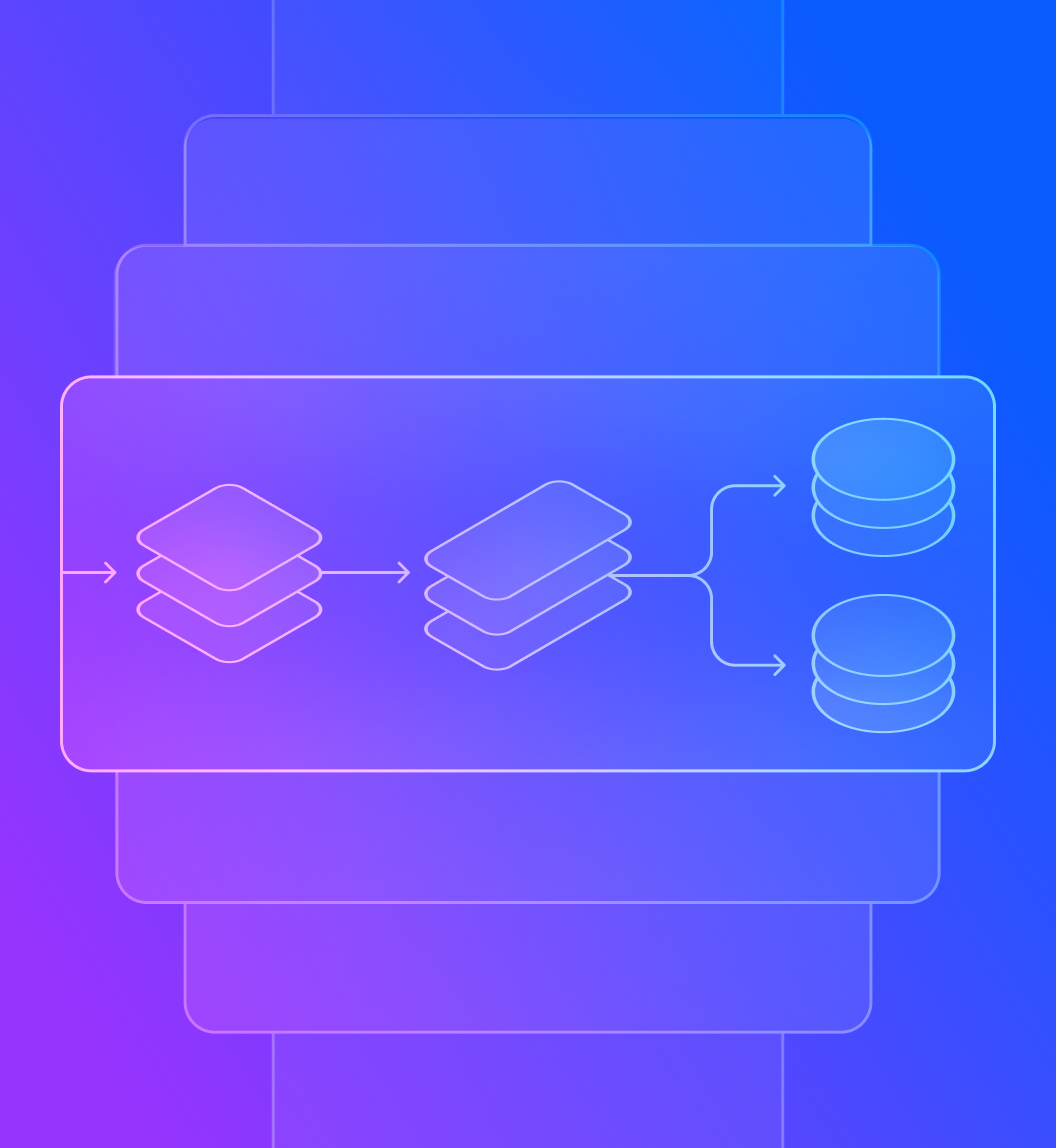
When multiple systems need the same business rules, the default is duplication, and duplication means drift. Xano becomes the single layer that every system goes through.
Frontends consume dynamic schemas—structured JSON that describes fields, validations, visibility rules, and UI intent.
Third-party APIs are wrapped in Xano.
Internal platform services call Xano for decisions and rules.
Vendor changes, new integrations, and system migrations happen at the Xano layer.

When business rules live in code, only engineers can see what's running. Xano's visual interface makes logic transparent to everyone.
Business logic is visible as step-by-step function stacks.
Domain experts can read, understand, and safely modify business rules within governed guardrails.
Role-based access control ensures that the right people can view, edit, or approve logic changes.

From scattered logic to governed infrastructure—step by step
Start with one domain where rules change frequently and are business-critical. That's your first workspace.
Before building any logic in Xano, design the interfaces: what does the rest of your system need to ask, and what should come back?
Move business logic into Xano as reusable functions behind governed API endpoints.
Frontends, internal services, and third-party integrations start consuming logic through Xano's APIs instead of their own embedded rules.
Once the pattern is proven, additional domains get their own workspaces. Cross-functional teams start building and maintaining logic together.
Start with one domain where rules change frequently and are business-critical. That's your first workspace.
Before building any logic in Xano, design the interfaces: what does the rest of your system need to ask, and what should come back?
Move business logic into Xano as reusable functions behind governed API endpoints.
Frontends, internal services, and third-party integrations start consuming logic through Xano's APIs instead of their own embedded rules.
Once the pattern is proven, additional domains get their own workspaces. Cross-functional teams start building and maintaining logic together.
The backend agents can build and
humans can trust.
Frequently asked questions
You don't have to replace your backend. Many companies use Xano to centralize where logic runs. Your rules are scattered across services, frameworks, and scripts. Xano becomes the execution layer where that logic is governed, versioned, and visible—without rewriting your existing systems.
Discipline helps, but it doesn't solve the structural problem. Business logic in application code is coupled to frameworks, deployment cycles, and the engineers who wrote it. Extracting it into a dedicated layer behind API contracts makes it portable, reusable, and accessible to people beyond engineering.
Yes—within governed guardrails. Xano's visual interface lets product managers and domain experts read, understand, and modify business rules without writing code. Role-based access control determines who can view, edit, or approve changes.
No. Xano sits behind APIs and doesn't require you to rewrite your frontends or databases. Most teams start with one domain and let Xano take over just that slice. Because it integrates through standard API contracts, you can adopt incrementally.
Xano is designed for reversibility. Your logic runs behind standard API contracts, so the systems consuming it don't know or care that Xano is behind them. You also get code export, deployment flexibility, and private environments.
Xano acts as a controlled integration layer. When your platform needs to interact with an external vendor, Xano validates the inputs, constructs the request, calls the vendor, normalizes the response, and applies your business rules before returning a clean, consistent result.
Absolutely. Scattered business logic is a problem regardless of AI. But AI makes it more urgent: agents need clear contracts, explicit rules, and predictable behavior. A governed logic layer is the foundation that makes agent integration possible.
Xano supports self-hosted deployment in your own cloud environment (AWS, Azure, GCP) with single-tenant architecture, SOC 2 and HIPAA compliance, and role-based access control. The platform is designed for regulated industries where correctness, security, and auditability are non-negotiable.
Sign up for Xano
Join 100,000+ people already building with Xano.
Start today and scale to millions.
Start building for free
©2026 Xano. All Rights Reserved.


