No-code in an AI-first
world
No-code used to mean using drag-and-drop builders, workflow automations, and visual database tools to build applications. Not anymore. Now, no-code means telling AI what you want it to build…and then watching it be built. Welcome to the AI era.

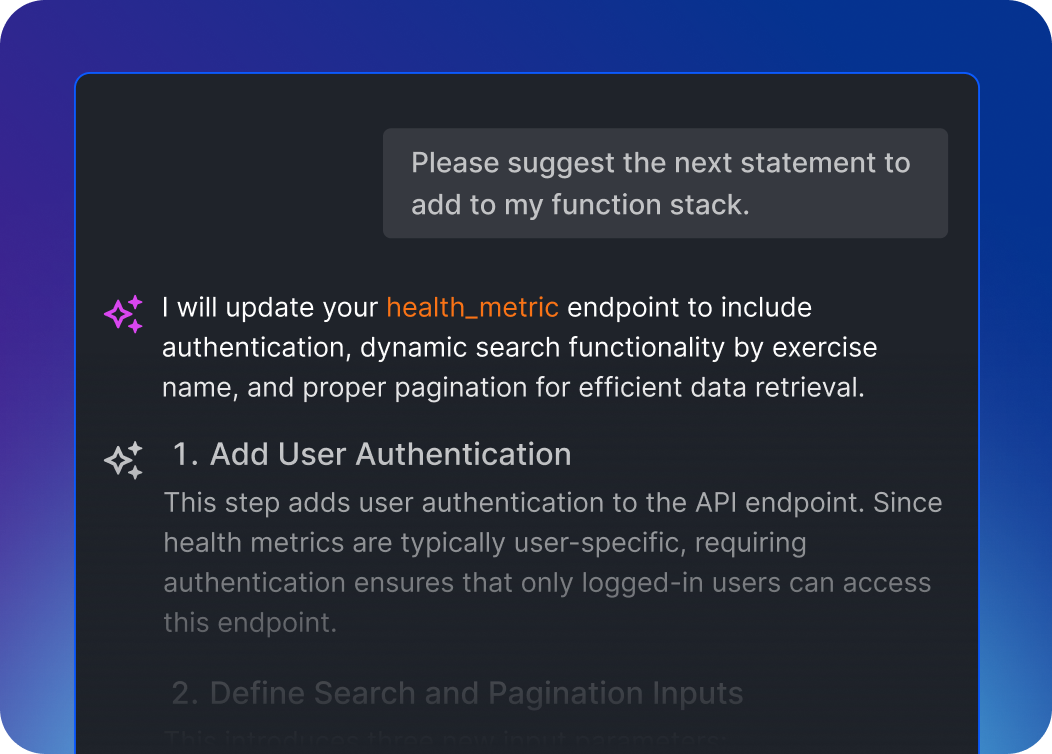
Natural-language prompting
Just say what you need, and go from there.

Visual validation
Understand why AI did what it did.

Easy adjustments
Fix it quick with just a few words.
How to balance opportunity and risk
Natural-language no-code unlocks enormous upside, where ideas can turn into working systems in minutes instead of months. But that same acceleration introduces new dangers: systems evolve before organizations fully understand them.
Balancing opportunity and risk requires developers that understand the importance of making AI-generated backend logic visible, inspectable, and controllable.
“Prompt-to-app” approaches lower the barrier to entry for generating code and prototyping, but can introduce deep, contextual defects that are exponentially more expensive to fix than simple coding errors.
(Gartner, 2026 Predicts: AI Potential and Risks Emerge in Software Engineering Technologies)
From no-code to visual validation
As more no-coders lean on AI, being able to visualize the logic that's being built is critical to ensure that logic is accurate, complete, and safe. Choose a platform that will easily visualize what you've built, and not just leave you with lines and lines of code.
Learn more about visual validation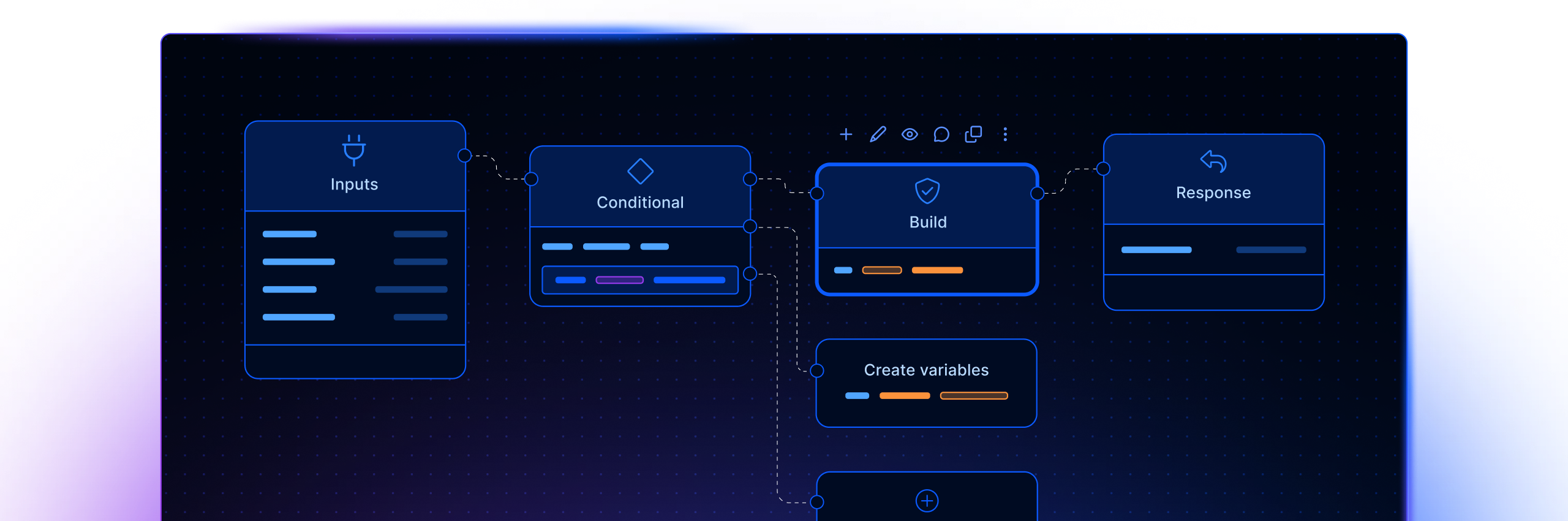
The questions every team needs to answer
Natural-language no-code can be very risky if not carefully governed. Here are some critical questions every team should be asking.

How do we control what natural-language no-code creates?
Can we define guardrails that ensure the backend logic is correct, intentional, and ready for production?
How do we prevent natural-language no-code systems from becoming black boxes?
Can we inspect what was built, understand how it behaves, and reason about changes before they reach customers?
How do we govern no-code at scale?
As more people participate in software creation, can we enforce security, compliance, and architectural standards without slowing teams down?
Backend-First Development: The Smart Way to Build with AI
Learn why starting with your backend is essential — better logic, faster frontends, and scalable, secure systems.
Read the blogNo-code → natural-language
No-code used to be a tool for non-developers to build things.
Reborn as natural language no-code, it's a tool for
everyone—including developers—to build something great.
Your backend is what makes the
natural-language no-code difference
With a backend built for developers, you can:

Govern AI-generated backend logic instead of treating it as a black box
Understand system behavior end-to-end before it reaches production
Inspect what natural-language prompts actually produced
Align developers, product, and business stakeholders around a single source of truth
Validate security, permissions, and data access early
Make changes confidently as systems evolve
Xano gives your team
the AI advantage
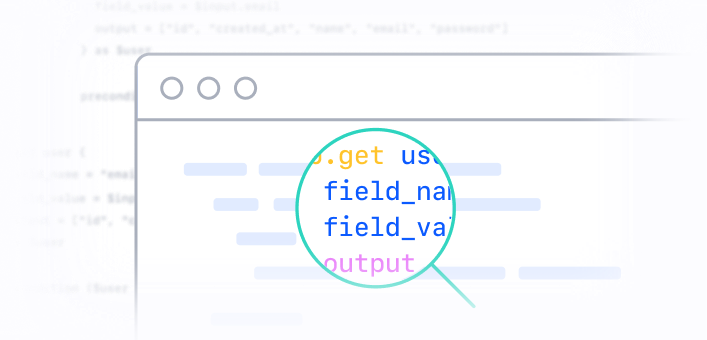
Xano doesn’t hide complexity—it makes it explicit and inspectable.
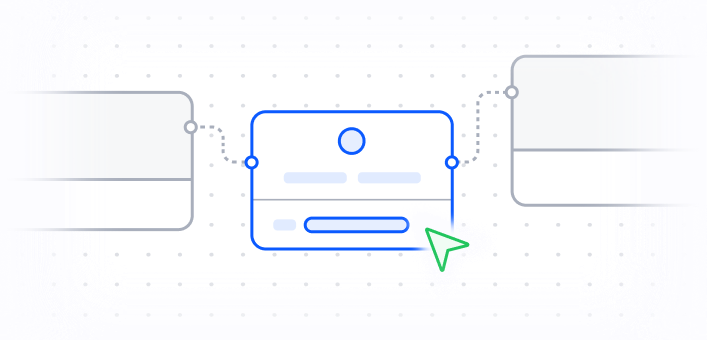
Visual logic represents real execution paths, not mock abstractions.
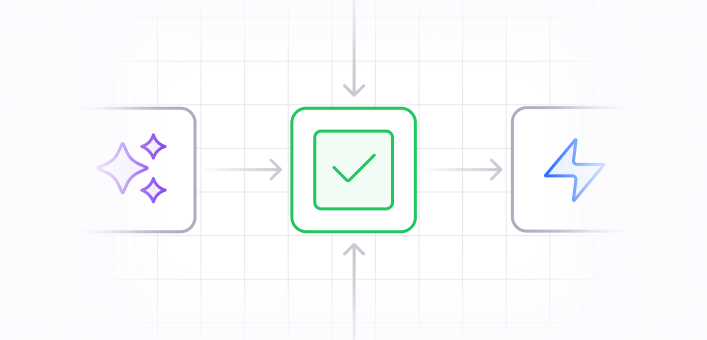
AI-generated logic can be validated visually before it impacts production.
Related resources


Build, connect, and scale your backend with confidence — powered by Xano.
Frequently asked questions
No-code no longer means “no logic” or “no engineering.” Today, no-code refers to building software systems without writing low-level source code by hand. Instead, developers define behavior through natural language interpreted by AI. The abstraction layer has changed—not the rigor required to build real applications.
No. Natural-language no-code is used widely by professional developers, product teams, and enterprises. The value is not avoiding complexity, but controlling complexity—moving repetitive, boilerplate, and infrastructure work out of the critical path so teams can focus on system design and business logic.
Yes—if the platform is designed for production. Serious no-code platforms support relational databases, API orchestration, authentication, permissions, background jobs, integrations, observability, and scaling. The difference between hobbyist tools and production-ready no-code is whether they can support long-lived, evolving systems with real users and real data.
Low-code typically means you still have to write some traditional code, just less of it. No-code focuses on higher-level intent, where systems are defined through natural language, and the platform handles execution details. In practice, modern platforms often blend the two—allowing code when needed without making it the default.
Poorly designed no-code platforms can be restrictive. Well-designed ones are the opposite. By abstracting infrastructure, plumbing, and repetitive patterns, no-code platforms often provide more flexibility, not less—especially when they allow custom logic, integrations, and extensions where it matters.
AI is turning no-code into a conversational and intent-driven workflow. Instead of manually wiring every piece, developers can describe what they want—schemas, logic, integrations—and AI helps generate, validate, and iterate on those systems. This doesn’t remove the need for understanding; it accelerates design, reduces errors, and shortens feedback loops.
Prototyping is a benefit, not the end goal. Modern no-code platforms are designed so prototypes can evolve directly into production systems. The key is whether the platform supports versioning, environments, testing, and architectural discipline—so speed early on doesn’t create fragility later.
As long as logic is also expressed visually or declaratively, systems often become more maintainable. Flows, schemas, and rules are easier to reason about than thousands of lines of custom code. The critical factor is transparency: teams must be able to inspect, understand, and evolve the system as requirements change.
Yes, when the platform supports isolation, access control, auditability, compliance standards, and deployment flexibility. Enterprises don’t adopt no-code to avoid governance—they adopt it to enforce consistency, reduce risk, and scale development without scaling complexity.
No-code isn’t replacing software development—it’s changing the level of abstraction at which development happens. Just as higher-level languages replaced assembly, and frameworks replaced raw infrastructure, no-code and AI-assisted tools move developers up the stack. The work shifts from writing instructions for machines to designing systems that reflect human intent.
Sign up for Xano
Join 100,000+ people already building with Xano.
Start today and scale to millions.
Start building for free
©2026 Xano. All Rights Reserved.


