Legacy applications create a difficult tradeoff: the system may be increasingly difficult to change, but replacing it can mean recreating years of business logic, integrations, data, and operational knowledge before the business gets anything new.
You don't have to rewrite a legacy application to modernize it.
A more practical approach is often to keep the systems and business logic that still work, introduce modern APIs and services around them, and move functionality incrementally as requirements change. This lets teams modernize without making the entire business depend on a single, high-risk migration.
That distinction matters more as AI changes how quickly teams can build software.
Creating a new interface, workflow, or service has become dramatically faster. Replacing years of business logic, integrations, data, and operational knowledge has not.
The question isn't necessarily "How do we replace our legacy application?"
It's increasingly "How do we build what's next without rebuilding everything that came before it?"
What is legacy application modernization?
Legacy application modernization is the process of improving an existing application, architecture, or development workflow without necessarily replacing the entire system.
Depending on the application, modernization can include:
- exposing existing systems through modern APIs
- replacing individual services or workflows
- moving business logic out of legacy code
- connecting new applications to existing data and systems
- introducing modern authentication or integrations
- building new user experiences over existing systems
- moving workloads incrementally to a new architecture
A full rewrite is one modernization strategy. It isn't the only one.
For many organizations, the more practical approach is incremental modernization: preserve what works, create a boundary between existing systems and new development, and move functionality when there's a reason to move it.
Why are full rewrites so risky?
A legacy application isn't just old code.
Over time, it accumulates business rules, integrations, edge cases, customer expectations, operational processes, and institutional knowledge. Some of those behaviors may not even be documented anywhere outside the application itself.
A rewrite has to reproduce all of that while simultaneously creating something new.
That creates a difficult tradeoff. The bigger the existing system, the more expensive it becomes to replace. But the harder it is to change, the more pressure there is to replace it.
Teams can spend months or years recreating functionality they already have before delivering anything meaningfully new.
Modernization can break that tradeoff by separating what needs to change from what can continue working.
What is the best way to modernize a legacy application without rewriting it?
Start by creating a boundary between the existing system and new development.
Instead of treating the legacy application as one thing that must eventually be replaced, identify the data, workflows, and business capabilities that new applications actually need.
Then expose or extend those capabilities through modern interfaces.
A common path looks like this:
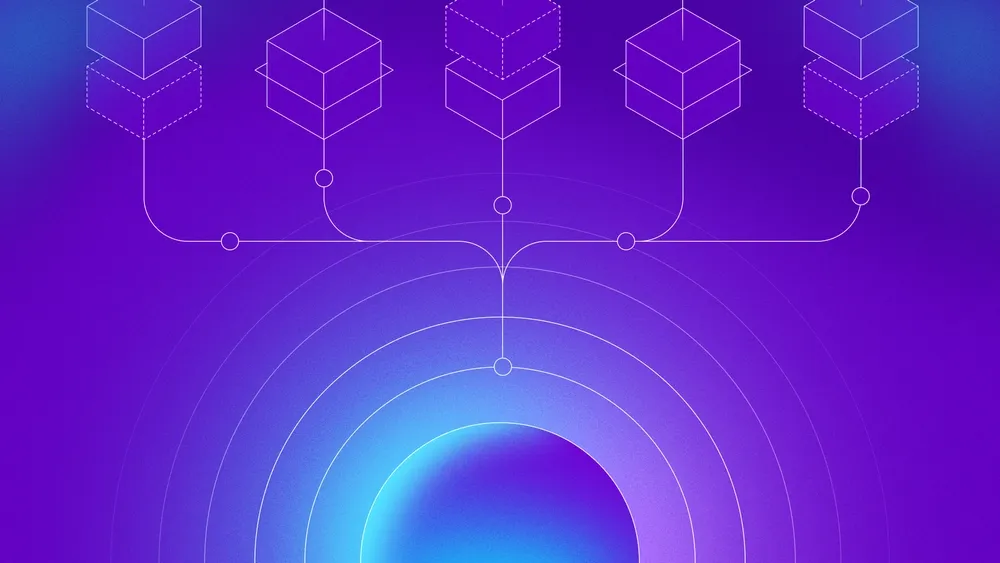
Existing systems → API and orchestration layer → new applications and workflows
The existing system continues doing the jobs it already does well. The new layer gives developers a controlled place to introduce new APIs, integrations, workflows, and business logic.
Over time, functionality can move across that boundary when there is a reason to move it.
This approach is commonly known as the Strangler Fig pattern: new functionality gradually surrounds and replaces parts of an existing application rather than requiring one large cutover.
Modernization becomes a sequence of manageable changes instead of one enormous replacement project.
How does API modernization help?
APIs create a cleaner interface between what already exists and what teams want to build next.
Imagine an internal system that has handled customer accounts for fifteen years.
The account data is reliable. The business rules work. Replacing the entire system would be expensive.
But the company now wants to build a customer portal, an AI-assisted support workflow, and a new internal operations application.
Those projects shouldn't necessarily require three teams to integrate directly with the legacy system.
Instead, a modern backend layer can expose the capabilities they need:
GET /customers/:id
POST /customers/:id/update
GET /accounts/:id/status
The new applications interact with those APIs rather than becoming tightly coupled to the underlying legacy architecture.
That creates a stable interface for new development while giving the organization more freedom to change what sits behind it later.
What should you modernize first?
Don't start with the oldest code.
Start with the places where the existing architecture is preventing the business from moving.
Good candidates include:
- functionality that changes frequently
- integrations that are difficult to maintain
- workflows multiple new applications need
- business logic duplicated across systems
- manual processes that should become APIs
- areas where teams cannot safely ship changes
- functionality needed by AI agents or new applications
That shifts modernization from a technology cleanup project to a business capability project.
Instead of asking, "Which system should we replace first?" ask:
"What do we need to be able to build or change that is unnecessarily difficult today?"
That question usually produces a much more useful modernization roadmap.
What does application modernization look like in practice?
Xano customer Deriv modernized the backend behind a global, 24/7 trading business where reliability and availability are critical.
After operating since 1999, Deriv needed an architecture that could support continued growth while giving its teams a more standardized way to build, understand, test, deploy, and operate software.
With Xano, Deriv built a service-oriented architecture with clear ownership, database and API boundaries. The first customer-facing brand went live on the new infrastructure within 6 months, followed by the full client migration in another six months. A comparable migration previously took two to three years.
But the bigger change was the development and operational model around the software.
Preview, staging, and production gave developers a defined path to build and test changes before they reached customers. Teams could inspect how production functions behaved, understand the APIs and logic within each service, and deploy without taking on the underlying infrastructure burden themselves.
That model becomes even more important with AI-powered development. AI can make software dramatically faster to create, but teams still need a reliable way to understand what was built, test how it behaves, review changes, release them safely, observe them in production, and manage the infrastructure underneath them.
That's the larger lifecycle Xano is designed to support:
AI or developer → governed build → understand → test → review → release → runtime → observe → infrastructure → scale
The business logic stays inside that loop.
Xano combines the development layer with the operational layer underneath it, including APIs, data, business logic, environments, testing, release management, observability, Docker workloads, regional deployment, and infrastructure options. Xano's infrastructure automation can extend that lifecycle further by helping manage and optimize the infrastructure running those applications.
For Deriv, that meant the goal wasn't simply to write code faster. It was to have less complexity to manage while retaining the controls required to run critical software in production.
Where does AI fit into legacy application modernization?
AI makes the incremental approach even more relevant because the cost of creating new software is falling quickly.
Coding agents can help teams create APIs, workflows, integrations, and new applications much faster than traditional development alone.
But faster generation doesn't remove the underlying architecture problem.
An AI agent still needs to know:
- where the relevant data lives
- which existing business rules must be preserved
- what systems it is allowed to change
- how new functionality should interact with existing services
- how the resulting software will be tested
- how changes reach production
- who operates the application afterward
Without those boundaries, AI can simply create another generation of software that becomes difficult to understand and maintain.
The opportunity is bigger than using AI to rewrite legacy code faster.
It's giving humans and AI agents a modern development surface over the systems the business already depends on.
Xano's Developer MCP and CLI give developers and coding agents a way to work with Xano through modern development workflows while retaining the structure of the underlying backend.
How can Xano support incremental application modernization?
Xano can sit between existing systems and the new applications, workflows, and agents teams want to build.
Instead of rebuilding every service before development can begin, teams can connect existing APIs and services to Xano, expose new endpoints, introduce new business logic, and orchestrate workflows across systems.
That gives teams a place to build new functionality without requiring every underlying system to change first.
With Xano, teams can use:
- APIs and function stacks to expose and orchestrate business capabilities.
- External API integrations to connect existing systems and services.
- Microservices to bring existing Docker containers and Helm charts into the workspace and call them from Xano workflows.
- XanoScript and visual logic to create and inspect new backend logic.
- Developer MCP and CLI tooling to let developers and coding agents work with the backend through modern development workflows.
- Branches and isolated environments to develop and test changes separately before they reach production.
The result isn't another application sitting beside the legacy stack.
It's a path for gradually changing the stack.
Do you eventually have to replace the legacy system?
Maybe. But modernization doesn't have to begin with that decision.
An incremental architecture gives teams options.
Some legacy systems may eventually disappear as functionality moves elsewhere. Others may continue running for years because they reliably perform a specific job.
Both outcomes can be reasonable.
What changes is that the old system no longer determines how quickly everything around it can evolve.
New applications can use modern APIs. New workflows can span old and new systems. Teams can move individual capabilities when the business case makes sense.
Modernization becomes continuous rather than a once-a-decade transformation project.
How do you modernize without creating another legacy system?
This is the part modernization projects can miss.
Moving functionality out of a legacy application isn't enough if the replacement becomes another collection of services nobody can understand, test, or safely change.
The new architecture still has to be operable.
Teams need to know:
- what logic exists
- where data moves
- which systems depend on each other
- what changed between releases
- whether changes have been tested
- what is running in production
- how to roll back when something goes wrong
That becomes even more important as humans and AI agents both contribute to the software.
We've written separately about how enterprises can trust software built by AI agents. The same principle applies to modernization: teams need to understand what was built, verify how it behaves, and have a controlled path for getting changes into production.
Deriv's experience reinforces the point. Standardizing its services didn't just make the migration faster. It meant that once a developer understood one service, they could move into another and know where the APIs were, where the functions lived, and how the service worked.
The goal isn't simply to replace old technology with newer technology.
It's to create an environment where custom software is easier to build, understand, test, deploy, operate, and maintain over time.
Modernize the path, not everything at once
Legacy modernization doesn't have to begin with a rewrite.
Start with the constraint preventing your team from building what it needs next.
Put a modern interface around the systems that already work. Introduce new APIs and business logic where they're needed. Move functionality incrementally when there is a clear reason to do it.
AI can accelerate that process dramatically, but the underlying principle stays the same:
Preserve what works. Modernize what is holding you back. Build a path that lets you keep changing.
That's the approach Xano enables: a production backend for new applications, existing systems, and the business logic connecting them, without requiring teams to assemble and operate the entire backend stack themselves.
See how Xano works.
Frequently asked questions
Can you modernize a legacy application without rewriting it?
Yes. Teams can modernize incrementally by exposing existing capabilities through APIs, introducing new services and business logic around the existing system, and migrating individual functions over time rather than replacing the entire application at once.
What is the difference between application modernization and a rewrite?
A rewrite replaces most or all of an existing application. Application modernization is broader and can include API modernization, incremental migration, re-platforming, new integrations, new interfaces, or selectively replacing parts of an existing system.
What is incremental legacy modernization?
Incremental modernization breaks a large transformation into smaller changes. Existing systems continue operating while teams introduce modern APIs, services, workflows, or applications around them and gradually migrate functionality where it makes sense.
How can APIs help modernize legacy applications?
APIs create a stable interface between existing systems and new applications. They allow teams to expose data and business capabilities without requiring every new application to integrate directly with the underlying legacy technology.
Can AI help modernize legacy applications?
Yes. AI coding agents can accelerate the creation of APIs, integrations, workflows, and replacement functionality. Teams still need clear architecture, testing, release controls, and production operations around what those agents build.
What should you modernize first in a legacy application?
Prioritize areas where the existing architecture is preventing the business from changing or building something important. Frequently changing workflows, difficult integrations, duplicated business logic, and capabilities needed by multiple new applications are often strong starting points.